Project Zomboid Weapon and Combat Progression in Build 42
Weapon tiers, skill paths, noise management, and the endurance economics of clearing Knox County.
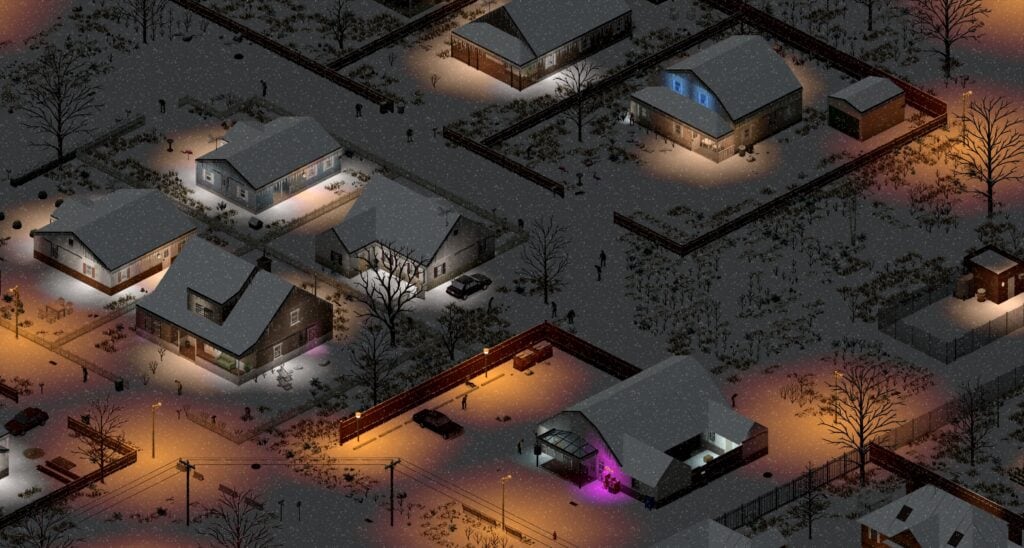
Combat in Project Zomboid is an economy as much as a skill. Every swing costs endurance, produces noise, risks injury, and degrades weapon durability. Build 42 revised weapon balance, swing timings, and knockback mechanics, so the weapon hierarchy that worked in Build 41 may mislead new players. This guide maps weapon tiers, progression gates, skill investments that matter, and the noise-endurance calculations that determine whether your character survives month one or burns out in week two.
Weapon tier overview
Tier 1: Found weapons (days 1-7)
These weapons appear in residential and commercial loot early:
- Baseball bat: baseline damage, moderate durability, common. The tutorial weapon for combat fundamentals.
- Crowbar: higher damage than bat, excellent durability, pry capability for barricades. Preferred over bat when available.
- Kitchen knife: high damage-per-swing but extremely low durability. Emergency weapon only.
- Frying pan: decent blunt damage, infinite durability, quiet. Underrated early find.
Tier 2: Salvaged and crafted (days 7-30)
These require finding materials or progressing crafting skills:
- Pipe: higher damage than bat, moderate durability, spawns in industrial areas.
- Axe (fire axe, hand axe): significant damage increase, lower swing speed, moderate durability. The step up from blunt to edged.
- Spear: crafted weapon using long blunt plus material. Reach advantage compensates for lower individual damage.
- Sledgehammer: rare find (warehouses, work vans) or crafted at forge. Highest blunt damage, slowest swing, heavy endurance cost.
Tier 3: Firearms (mid-game, gated by location and risk)
- Pistols (9mm, .45): moderate damage, common ammo, low noise. The entry point for ranged combat.
- Shotguns (double-barrel, pump-action): high close-range damage, loud, scarce ammo. Short-range-only until you establish ammo supply.
- Rifles (.223, .308): high accuracy and damage at range, very loud, rare ammo. Endgame ranged option.
- SMGs: high fire rate, moderate damage, loud, ammo-hungry. Requires dedicated ammo farming.
Tier 4: Forged and specialized (late game)
- Crafted spears with metal heads: significant damage upgrade from wooden spear.
- Modded weapons from gameplay-altering mods (not covered here).
- Specially spawned weapons in challenge modes and custom sandbox presets.
Swing mechanics and timing
The attack cycle
Each attack consists of:
- Wind-up: brief charge before swing. Can be canceled by moving (at cost of endurance).
- Swing: the active hit window. Determines damage and knockback.
- Recovery: cooldown before next action. During recovery, you are vulnerable.
Build 42 adjusted recovery frames compared to Build 41. Faster weapons (knives, small blunt) have shorter recovery but lower damage. Slower weapons (sledgehammer, axes) have longer recovery windows.
Shove-stomp fundamentals
The most important combat technique:
- Shove: right-click to push zombie back. Costs endurance, creates space.
- Stomp: follow shove with foot attack on downed zombie. Zero weapon durability loss, full damage.
Shove-stomp preserves weapon durability and manages groups without the noise of repeated swings. Every weapon benefits from shove-stomp; it is the foundation of efficient solo combat.
Combo considerations
Zombie positioning after each swing determines next action:
- If zombie is still standing and within range: swing again or shove.
- If zombie is knocked down: stomp immediately.
- If multiple zombies are close: shove the most dangerous first, then clear.
Endurance economics
Endurance cost per action
- Light attack (knife, pan): 3-5% endurance per swing.
- Medium attack (bat, pipe): 6-10% endurance per swing.
- Heavy attack (axe, sledgehammer): 12-18% endurance per swing.
- Shove: 4-7% endurance.
- Stomp: 2-3% endurance.
A character with 100 endurance pool can execute roughly 10-15 medium attacks before exhaustion. Combat involving 20+ zombies in a session will drain you regardless of build.
Managing endurance pools
- Rest between fights. Do not attempt consecutive high-zombie encounters without recovery time.
- Fitness and Strength traits directly increase endurance pool and recovery rate.
- Nimble trait reduces endurance cost of all combat actions.
- Sprinting to engagement costs endurance before combat even begins. Approach on foot when possible.
Exhaustion consequences
Exhaustion causes:
- Slower swing speed (desperation attacks).
- Higher panic gain from damage.
- Reduced run speed.
- Potential loss of consciousness in extreme cases.
Never fight to complete exhaustion. The 20% endurance you preserve for the retreat matters more than the 3 zombies you could have killed.
Noise production by weapon type
Quiet weapons (stealth viable)
- Fists: completely silent. Viable for small groups of frail zombies.
- Spears: relatively quiet swings. Effective for surprise takedowns.
- Kitchen knife: quiet but fragile. Emergency option.
Moderate noise weapons
- Baseball bat: moderate swing noise. Suitable for residential encounters.
- Crowbar: slightly louder than bat. Trade-off for pry capability.
- Pipe: similar noise to crowbar.
Loud weapons (zombie aggregation risk)
- Axe: significant swing noise plus impact sound. Announces your position.
- Sledgehammer: extremely loud. Should only be used when isolation is confirmed or noise is acceptable.
Firearm noise tiers
- Pistol (suppressed, if available): 30-40 tiles. Suppressors rare in base game.
- Pistol (unsuppressed): 60-80 tiles. The baseline firearm noise.
- Shotgun: 80-100 tiles. Louder than pistol; attracts significant hordes.
- Rifle: 100+ tiles. The noisiest common weapon. Use only on confirmed isolated targets or accept horde migration.
Weapon durability and maintenance
Durability tiers
- Infinite durability: fists, some crafted blunt weapons (frying pan). No maintenance required.
- High durability (200+ swings): crowbar, pipe, baseball bat. Low maintenance concern.
- Medium durability (80-150 swings): axe, crafted spears. Monitor condition.
- Low durability (30-80 swings): knives, some specialized weapons. High maintenance requirement.
Maintenance habits
- Repair at 30% condition or above. Below 30%, repair quality diminishes significantly.
- Use appropriate repair kits. Metal weapons require specific repair items.
- Carry backup weapons. A broken weapon mid-combat is a death sentence.
- Forged weapons can be repaired at anvil with appropriate metal and skill.
Skill progression for combat
Short Blunt
Starts relevant. Baseball bats, pipes, pans, and crowbars are all short blunt. Progression unlocks:
- Better knockback at higher levels.
- Reduced endurance cost per swing.
- Faster swing speed at levels 4+.
Level via repeated combat. Early game, prioritize this skill.
Short Blade
Higher damage potential but extremely low durability makes this a niche choice. If using kitchen knives or similar:
- Higher crit chance against exposed zombies.
- Faster swing speed than blunt.
Generally inferior to short blunt until late game when durability issues are managed.
Long Blunt
Axe and sledgehammer territory. Progression unlocks:
- Significant damage increases (important for one-shot potential).
- Better durability maintenance at higher levels.
Long blunt is slower but more lethal per swing. Consider when you have reliable endurance management.
Axe (specific skill)
Axe proficiency affects damage and speed specifically with axe-type weapons. Higher axe skill means:
- Faster recovery between swings.
- Improved knockback on heavy zombies.
Maintenance and repair skills
Not combat directly, but maintenance skill affects repair quality and longevity. At higher levels, repaired weapons retain more condition.
Progression path by playstyle
Stealth-first progression
- Days 1-7: fists and knife only for surprise encounters. Avoid direct combat.
- Days 7-14: acquire crowbar or bat. Begin practicing shove-stomp.
- Weeks 3-4: transition to axe for higher damage when contact is unavoidable.
- Month 2+: firearms only when noise consequence is acceptable.
Balanced progression
- Days 1-3: any available weapon. Prioritize not dying.
- First week: establish bat or crowbar proficiency via short blunt.
- Week 2: find or craft axe. Begin long blunt progression.
- Weeks 3-6: maintain two weapons (primary damage, secondary backup).
- Month 2: introduce firearms cautiously with ammo farming established.
Aggressive early combat
- Day 1: actively seek zombie encounters for skill gains.
- First week: establish weapon skill and endurance base.
- Week 2: push into higher-risk areas (gun stores, police stations).
- Ongoing: maintain aggressive clearing to keep routes low-zombie.
Group combat coordination
Online co-op combat requires communication:
- Call targets: “three on me, north door” lets teammates position correctly.
- Stagger engagement: do not all attack simultaneously. Noise from multiple swings compounds.
- Designate roles: one player pulls, others attack from flanks.
- Share endurance: if one player is exhausted, others cover extraction.
Common combat mistakes
- Swinging wildly: each swing is commitment. Do not spam attacks.
- Ignoring shove: trying to kill standing zombies when shove-stomp is more efficient.
- Fighting to exhaustion: preserving retreat endurance matters more than final kills.
- No backup weapon: broken primary mid-fight is catastrophic.
- Ignoring sound: continuing to fight when alert zombies are converging.
- Night combat in open: visibility disadvantages outweigh any other factor.
Build 42 combat changes
Build 42 revised knockback formulas, swing timing, and weapon balance compared to Build 41. Key changes:
- Knockback from heavier weapons increased.
- Recovery frames on axe swings adjusted.
- Some low-tier weapons (frying pan, kitchen knife) received durability improvements.
- Firearm accuracy and recoil patterns stabilized.
Validate weapon preferences in current build rather than relying on Build 41 muscle memory.
Frequently Asked Questions
Quick answers to the most common questions.
What is the best beginner weapon in Build 42?
Crowbar offers the best balance of damage, durability, and pry capability. Baseball bat is more common and works well until you find one. Frying pan has infinite durability and moderate damage—underrated early find.
How does shove-stomp work in Project Zomboid?
Shove (right-click) pushes zombies down. Stomp (attack key while targeting downed zombie) deals full damage with zero weapon durability loss. Shove-stomp is the foundation of efficient solo combat.
When should I switch from melee to firearms?
Firearms become viable once you have established ammo supply (usually week 3+), understand noise consequences, and have backup melee for close quarters. Firearms are never mandatory—melee-only runs are viable with proper endurance management.
How do I manage endurance in extended combat?
Rest between fights, level Fitness trait for larger pool, use Nimble to reduce action costs, and know when to retreat rather than fight to exhaustion. Never engage 20+ zombies without recovery time between.
What weapons are quiet enough for stealth approaches?
Fists are completely silent. Spears are relatively quiet. Kitchen knives are quiet but fragile. Baseball bats and crowbars produce moderate noise. Axes and sledgehammers are extremely loud and announce your position widely.
How important is weapon durability in Build 42?
Critical. Carry backup weapons and repair at 30% condition or above. Crowbar and pipe have high durability; knives have low durability. Broken weapon mid-combat is potentially fatal.