Project Zomboid Annotated Maps and Stashes
Read the paper before you enter the building—signposts, duffels, and the Map 9 apartment rewrite.
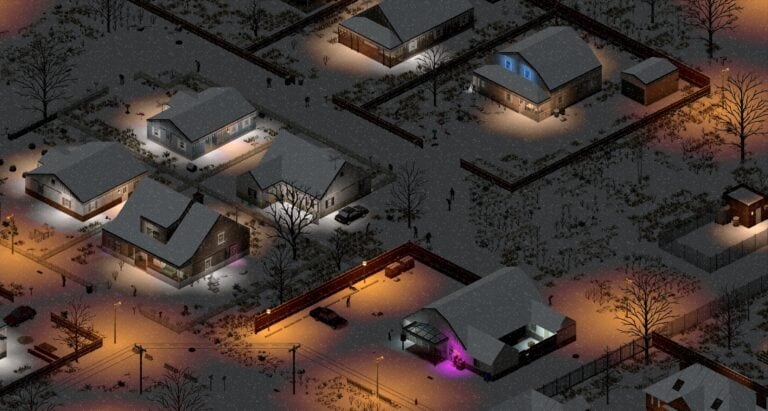
An annotated map looks like a town map with extra ink: arrows, “guns here,” lies about trucks, and the occasional love letter to a dead roommate. Players search “Project Zomboid annotated map,” “Map 9 Knox apartments,” and “stash map Louisville” because the item is easy to waste. If you walk into the target building before you read the map, many stashes never spawn. This page is the Build 42.20.4 field manual: where maps drop, sandbox chance, stash classes, March Ridge’s ten, Louisville’s sixteen, and what the notes cannot do (spawn a keyed car). Town geography stays on Echo Creek and March Ridge and Louisville. The zoom website stays on Interactive Map.
How a stash map is born
- Loot a region map (glove boxes, bags, corpses, some containers).
- Sandbox Annotated Map Chance may promote it to an annotated item (Apocalypse often Sometimes, Outbreak Often, Extinction Extremely Rare, Never = none).
- The game picks a remaining stash definition for that town (Map 1–N).
- You read the map (inspect / read so notes appear).
- When the target building first loads with that stash still pending, the world applies extra loot, optional barricades, traps, extra zombies, or special containers.
Zombie-map only stashes only exist if that map item came off a zombie. Container and car maps cannot roll those IDs. March Ridge Map 9 is a known exception that can roll from containers and vehicles.
Build 42 added annotated maps for new western towns; some items still reuse older map bases as placeholders. If a Brandenburg note looks like a Rosewood sheet, believe the marks, then verify the building in-game.
Classes of notes (do not treat every X as a vault)
Signpost maps point at schools, hospitals, strip malls, galleries. They tell a story. They often do not spawn extra loot. Louisville maps famously lie about trucks: the annotated-map system does not spawn vehicles. A parking-lot spawn zone might still roll a car. That is luck, not the paper.
Duffel / crate caches add a bag or crate and sometimes rewrite kitchen and bathroom containers in the house. Check every cabinet, not only the marked room.
Survivor / safehouse maps barricade a house (community reports of very high barricade levels on some Louisville maps—bring a hammer or crowbar). Stock weapons, food, tools. Great staging bases; terrible if you already looted the block.
Building rewrites (March Ridge Map 9) can treat an entire apartment block as the stash: every kitchen and bathroom rolls extra. That is why Map 9 is the drive-now map—and why entering early is a season-sized mistake.
March Ridge (ten maps)
Documented 42.x stash IDs (walk the lot; coordinates are 42.19-era anchors):
| Map | Approx target | Style |
|---|---|---|
| 1–2 | western houses | Gun caches / duffels |
| 3–4 | nearby houses | Shotgun-focused |
| 5, 6, 8 | houses / a shed | Tools (8’s shed has nowhere for kitchen loot—often a dud) |
| 7 | house | Survivor house, barricades |
| 9 | ~10092×12619 apartments | Big building rewrite |
| 10 | church ~10332×12794 | Medical floorboard |
Read Map 9 before the Knox Military Apartments interior loads. Passing other March Ridge streets does not consume it. Entering the apartments does. Full town context: Echo Creek and March Ridge.
Louisville (sixteen maps)
Louisville has the largest annotated set. Mix of signposts (hospital, storage, fairgrounds, art gallery stories), house caches, a cemetery “survivor cache” that cannot spawn loot in a tomb without counters, park stables, apartment crate-plus-building rolls, and several level-80-style barricaded safehouses. Bring tools to unboard. Do not trust “working car” circles. Watch a dedicated breakdown if you collect paper—video on this page covers the Louisville set.
For the fence, maps do not replace a sledge—Military Checkpoints.
Other towns
Muldraugh, West Point, Rosewood, Riverside, and others have their own annotated families. Same rules: read first, check kitchens and bathrooms, ignore vehicle promises. Western glow-up towns may use placeholder map items; still read before you clear the marked farmhouse.
In-game map versus annotated paper
The in-game map (found maps you add to the map view, C to pan to yourself on some patches) is navigation. Annotated maps are events. You need both. Do not delete the paper after reading until the stash is looted; some players keep the item as a checklist.
Multiplayer
Call “Map 9 unread, apartments untouched” in voice. The first client to load the chunk can consume the rewrite. Do not “scout the apartments real quick” while the reader is still in the car.
Early Access
Stash definitions, placeholder map bases, and 42.20 glow-up interiors still shift. If a YouTube coordinate is empty, the building moved or the stash already fired. Official support updates through 2026 include mapping tools—re-walk.
Ink on a map is a trigger, not a GPS miracle. Read it in the driveway. Then knock.
Frequently Asked Questions
Quick answers to the most common questions.
Should I read an annotated map immediately?
Read it before you enter the marked building. Reading in a safe parking lot is correct. Walking the interior first can consume or skip the stash spawn.
Do annotated maps spawn cars?
No. Notes that promise trucks are signposts. Vehicle spawn zones might still roll a car. Bring Hotwire skills, not faith.
What is March Ridge Map 9?
A large survivor-cache rewrite of the Knox Military Apartments if the map is read while the building is still unvisited. Without it, expect normal apartment loot.
Why did my tool stash spawn nothing?
Some definitions assign a shed or tomb with no kitchen/bathroom containers for extra loot to land in. Check every cabinet anyway, then move on.
How do I get more annotated maps?
Loot town maps, raise Annotated Map Chance in sandbox, and remember some stashes only roll from zombie-carried maps. Never is a valid setting—then you get zero.