Project Zomboid Late Game Progression Guide
What to do after your first month in Knox County — sustainable systems, skill mastery, and goal setting.
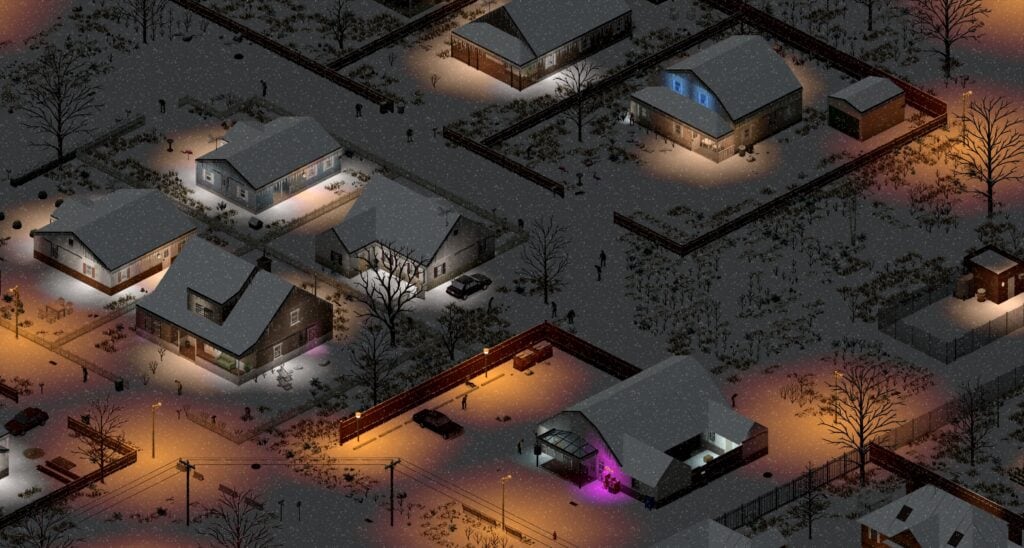
Most Project Zomboid deaths happen in week one. Most abandoned saves die in month two—not from zombies, but from boredom and logistics collapse. You cleared the city, secured water, survived the first helicopter. Now what? Build 42 Early Access late game is about sustainable systems that run without adrenaline: farming loops, skill progression, base hardening, and personal goals that give a reason to check the generator each morning. This guide covers month-two progression for survivors who want to push past the survival learning curve.
Pair this with Farming and Animals for food loops, Generators and Power for utilities, Skills and XP for ability mastery, and Safehouse for base layout evolution.
When late game actually starts
Late game begins when three conditions hold simultaneously:
- Core survival loop is automated — water collected, food accessible, zombie pressure understood.
- Skill progression is intentional — you are leveling specific skills rather than reacting.
- Base security is self-sufficient — walls hold without constant nail investment.
If you are still refilling water containers manually or dying to surprise grabs, stay in First Week Survival territory. Late game assumes basic competence.
Sustainable food systems
Town loot is finite. Month two is when pantries empty and you realize the Loot Routes you relied on are picked clean. Build food independence through:
Farming — Crop rotation and yield optimization from Agriculture. Plant surplus for winter buffer.
Animal husbandry — Chickens for eggs, cows for milk and meat. See Farming and Animals for pen design and feed math.
Trapping and fishing — Quiet protein that supplements but does not replace farming. Review Trapping and Bait and Fishing.
Preservation — Smoking, drying, and canning reduce refrigeration dependence. Pair with Food Preservation.
One loop fails; three loops survive. Stack farming plus trapping plus fishing for food security that does not require daily pharmacy runs.
Skill mastery timeline
By month two, your character has strengths and gaps. Prioritize leveling based on your base plan:
Carpentry 6+ — Unlock advanced walls, stairs, and furniture. Enables base expansion and rain collector networks.
Electrical 4+ — Generator wiring, wire management, and basic electronics. Needed before advanced base utilities.
Metalworking 3+ — Reinforced doors and airlocks. Protects month-three base investments.
Tailoring 3+ — Clothing repair and insulation. Reduces cold weather deaths in Winter Survival.
Combat skills — Whatever your build focused on. Month two combat is about efficiency, not learning basics.
Match book tiers to current levels per Skills and XP. Reading expert books at level two wastes multipliers.
Base evolution: from shelter to fortress
Month-one safehouses are temporary. Month-two bases should evolve toward:
Multi-room zoning — Separate sleep, medical, storage, crafting, and generator zones. No generator fumes in the bedroom.
Double-airlock entrances — Outer gate, inner door. Two zombies minimum to breach.
Vehicle bay — Covered or garage parking for Vehicle Maintenance. Protected cars last longer.
Rain water infrastructure — Multiple collectors feeding central storage. Independence from river trips.
Escape route — Sheet rope to roof or rear window. Never trap yourself in one room.
Upgrade incrementally. Do not demolish functional walls to rebuild prettier ones—see Safehouse and Base Defense and Wall Building.
Winter preparation
Every late-game survivor needs a pre-winter checklist:
- Water storage — Fill every container before freeze. Rain collectors useless under ice.
- Clothing layers — Tailoring repair and layering per Clothing and Weather.
- Heating plan — Generator fuel stockpile, fireplace supplies, or relocated base.
- Food surplus — Two months of preserved food minimum. Freezer backup if generator runs.
- Medical stock — Antibiotics for the infections that hit hardest during cold months.
Read Winter Survival fully before the first frost. Late-game deaths cluster around November.
Long-term goal setting
Project Zomboid has no win condition. Survive for the sake of surviving collapses runs. Set personal goals:
- Achievement runs — 100 days, 365 days, reaching skill caps.
- Community building — Co-op bases with friends, shared roles, seasonal wipe cycles.
- Base showcase — Self-imposed construction limits, decorative projects, roleplay servers.
- Challenge modes — Apocalypse settings, no respawn, extreme population.
Goals prevent the “what now” spiral that ends month-two runs.
Multiplayer late game
Co-op servers with long seasons need:
Role division — Farmer, builder, scavenger, medic. Defined roles prevent duplicated effort.
Shared base blueprints — One person leads construction; others supply materials.
Season restarts — Agree on wipe timing before burnout. Better to end on a high note.
Event planning — Helicopter response, horde defense, winter prep coordination.
See Server Admin Commands and Tools and Servers and Co-op for moderation tools.
Common late-game mistakes
- Neglecting water before winter — Assume 30 liters per day minimum.
- Ignoring clothing condition — Cold deaths are preventable with tailoring maintenance.
- No escape route — Upper floor without rope landing kills runs.
- Over-reliance on firearms — Ammo finite; melee efficiency keeps nights quiet.
- Building without materials — Half-finished walls attract zombies without stopping them.
- Solo burn out — Set a goal or join co-op; alone and aimless dies slowly.
Late game is about systems, not survival. Build loops that sustain themselves and a base that protects what you have earned.
Frequently Asked Questions
Quick answers to the most common questions.
When does late game start in Project Zomboid?
When your core survival loop (water, food, security) runs without constant crisis management. Usually month two or later on default settings.
What should I focus on in month two?
Food independence through farming and trapping, skill progression in carpentry and electrical, and base hardening for winter. Water storage before freeze is critical.
How do I prepare for winter in late game?
Fill water containers, repair clothing layers via tailoring, stockpile generator fuel, and preserve two months of food. See Winter Survival.
How do I prevent late-game boredom?
Set personal goals—skill caps, 365-day runs, challenge modes, or co-op community builds. The game has no win screen; you create the purpose.
What skills matter most for long-term survival?
Carpentry for base infrastructure, electrical for generator use, tailoring for clothing maintenance, and your combat specialization. Level them intentionally after basics are covered.